
Start with the venue, not the car
Couples looking at wedding venues in Bedfordshire usually compare the room, the grounds, the food and the date. The journey to and from the venue rarely makes the shortlist, yet it shapes the whole morning. How the car approaches, where it stops, how long the transfer takes and where photographs can happen all depend on the kind of venue you book.
This guide looks at the main venue types you will come across in the county, from country houses and estates to barns, churches and register offices, and what each one means for the wedding car. It does not rank or recommend venues. Every venue has its own arrival arrangements, so the most useful thing you can do is ask your venue coordinator a few simple questions and pass the answers on with your car enquiry.
Country houses and estates with long drives
Many of the best-known wedding venues in Bedfordshire are country houses and estates set in parkland, where the approach is part of the experience. A long drive gives you a slow, unhurried arrival and often the first clear view of the house. It also adds minutes to the journey that a map app may not show, because the last stretch is driven at a gentle pace.
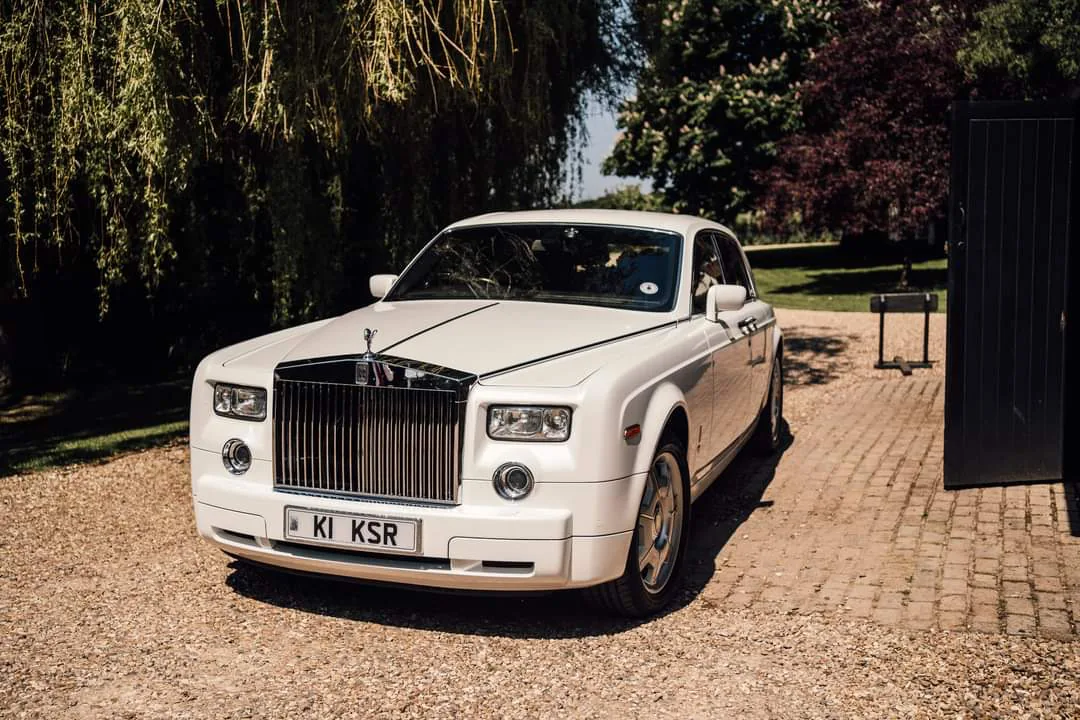
Ask the venue where wedding cars should stop: at the main entrance, a side door, a courtyard or a separate ceremony building. Some estates have a gatehouse or barrier, and some drives are gravel or narrow in places. Share those details with us so the chauffeur knows the approach in advance. The Rolls-Royce Phantom, with its rear-hinged coach doors, makes the most of a grand entrance, and the stopping point decides where that first step out happens.
If the ceremony and reception are both at the estate, you may only need the car for the arrival and a few photographs in the grounds. If the ceremony is elsewhere, the estate becomes the destination of the transfer, and the drive becomes the final part of the couple's quiet time together.
Barn venues on rural lanes
Barn and farm venues are popular across Bedfordshire for their space and relaxed feel. They are often reached by country lanes, sometimes single-track, with a farm track or private road for the last section. Tell us about the final approach when you enquire, including any gates, and whether the venue has suggested a particular route.
Rural venues can also mean that guests and cars arrive in a short window along the same lane. If the bridesmaids or family are arriving in a second car, such as the seven-seat Mercedes V-Class, plan their arrival a little earlier so the lane is clear for the bridal car. A few minutes of buffer here is worth far more than a rushed final mile.
Town-centre churches and register offices
Bedford and the county's other towns have churches and a register office where ceremonies take place in busier streets. Stopping space outside can be limited, and the car may only be able to pull in briefly to let the couple out. Ask the church or registrar whether there is a preferred drop-off point and whether a car can wait nearby during the ceremony.
Timing matters more here than anywhere. Registrars run to a schedule, and churches may have other services the same day. Our guide to church or register office car timings explains how the plan differs between the two, and the wedding day timeline guide walks through what happens from collection to the reception.
Timing the journey between ceremony and reception
When the ceremony and reception are at different places, the transfer is the one journey that cannot be squeezed. Build the time from the end of the ceremony, not the start: allow for confetti, congratulations, a few photographs by the car, the drive itself at a comfortable pace and the arrival at the reception. Then add a margin for traffic, particularly on a Saturday afternoon or near a town centre.
Rather than guessing, send us both addresses and the times on your venue schedules. The chauffeur plans the route in advance, and we will tell you how many hours to book so the transfer fits comfortably inside your fixed quote.
Where photographs with the car work
Estates and country houses often have a natural spot for photographs: the front steps, a gateway, an avenue of trees or a courtyard. Barns may have open yards or a backdrop of fields. Town-centre venues tend to have less room, so couples sometimes plan a short photograph stop on the way to the reception instead.
Talk to your photographer about where they want the car, and ask the venue whether that spot is accessible to vehicles. If you want a stop between venues, tell us in advance so it is built into the booked hours.
Guests arriving separately
Most guests drive themselves or share lifts, but parents, grandparents and the bridal party often travel by wedding car. Think about who needs to be at the venue before the couple and whether they are coming from the same address. A seven-seat V-Class keeps a group together, while a Mercedes S500 or Audi A6 suits two or three passengers.
If you are planning several cars, our wedding car hire page explains how bookings work, and the wedding car prices page shows the published off-peak offer prices for each car. To check your date, call 07977 407474 or use the short form below. We cover Bedfordshire, Hertfordshire, Buckinghamshire, Cambridgeshire, Northamptonshire and London.